Children are naturally curious about the world. They notice animals, water, weather, and changes in their environment long before they understand words like pollution or climate.
When ecology is taught with urgency or fear, children can feel overwhelmed. When it is taught through curiosity, care, and connection, children feel empowered.
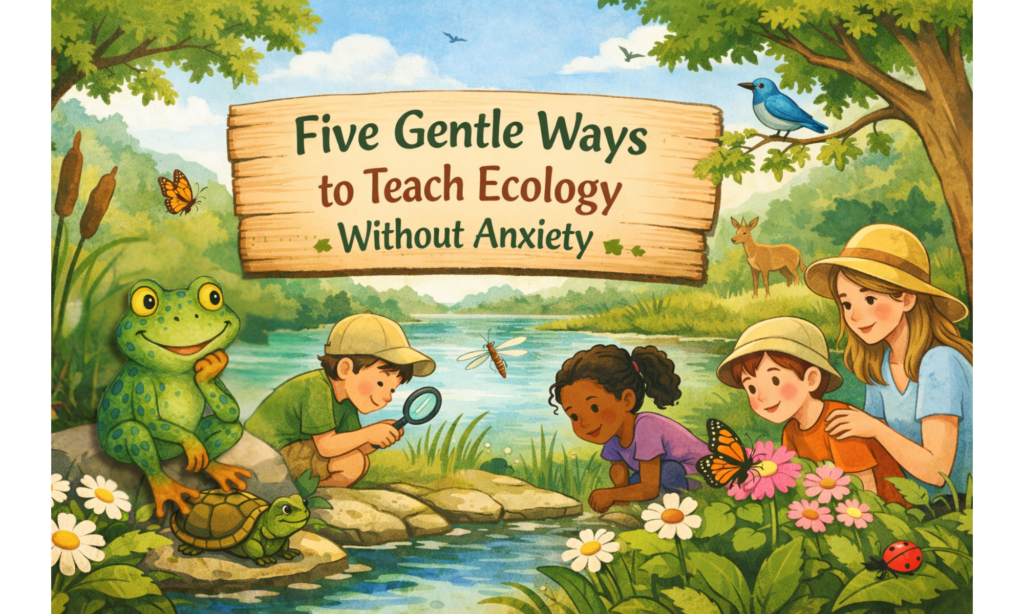
This guide offers a calm, story-centered approach to teaching ecology that builds understanding without anxiety.
Why Some Children Feel Anxious About Nature Topics
Children are still developing their sense of safety and scale. When they hear about environmental problems without context or agency, they may internalize worry instead of understanding.
Common causes of eco-anxiety in kids:
Hearing “big problems” without seeing solutions
Being told what is wrong without learning what helps
Feeling responsible for issues they cannot control
Learning through facts alone, without emotional grounding
The goal of ecology education at this age is not urgency. The goal is relationship.
What Children Need First
Before children can care for the Earth, they need to feel connected to it.
Effective early ecology education focuses on:
Observation before explanation
Relationships before responsibility
Wonder before worry
Small actions before big problems
When children feel connected, care grows naturally.
A Story-Based Approach to Ecology
Stories help children place information inside a safe emotional container.
Through story:
Nature becomes a community, not a crisis
Animals become neighbors, not statistics
Change becomes a cycle, not a catastrophe
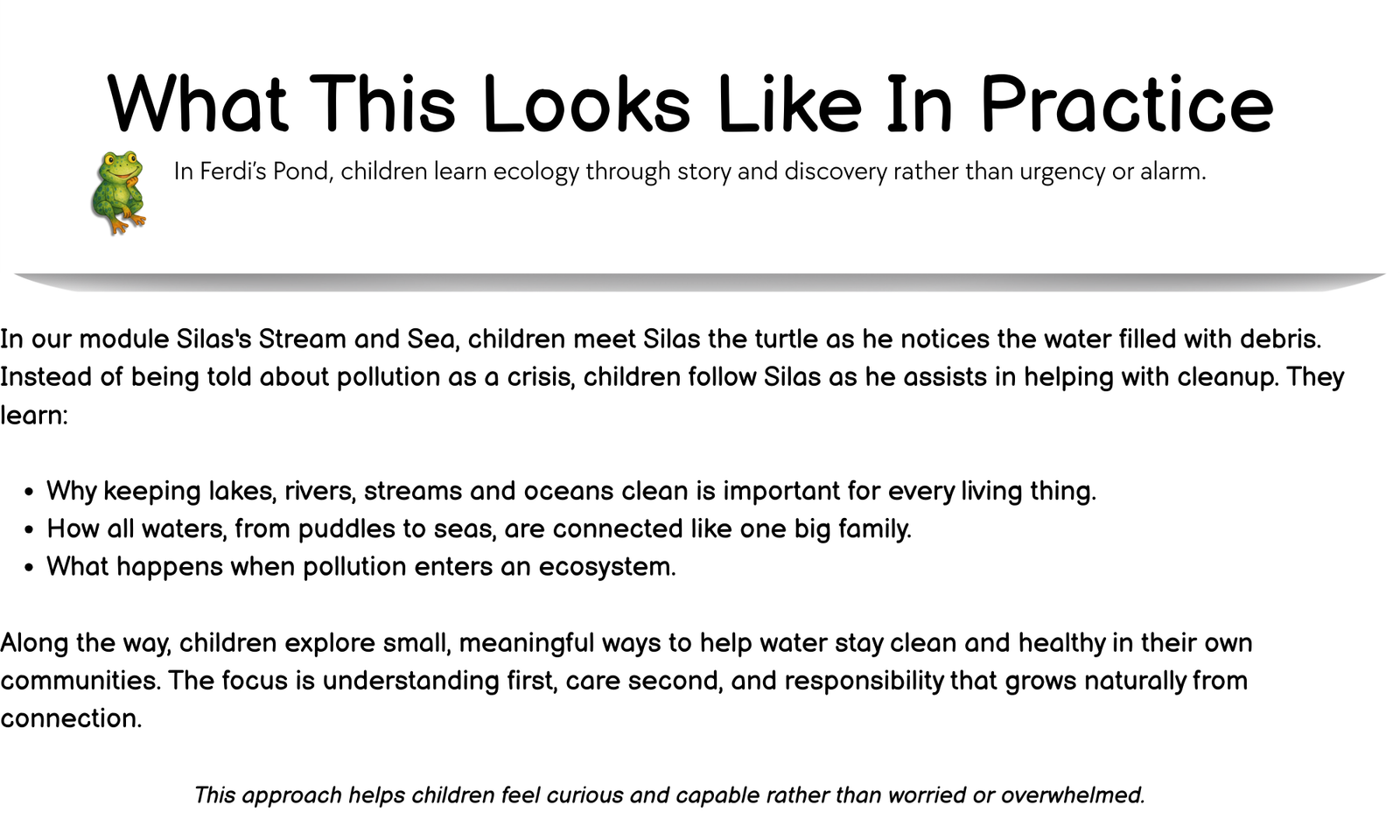
At Ferdi’s Pond, ecology concepts unfold through characters who live in the environment they are learning about. Children follow experiences, not lectures.
This allows learning to feel grounded and human.
Five Gentle Ways to Teach Ecology Without Anxiety
1. Start With Noticing
Encourage children to observe before explaining.
Ask questions like:
What do you see here?
What do you think lives nearby?
How does this place feel today?
Noticing builds awareness without pressure.
2. Use “Care Language” Instead of “Crisis Language”
Replace fear-based language with care-based language.
Instead of:
“This is being destroyed”
Try:
“This place needs care to stay healthy”
Children respond better to responsibility rooted in kindness.
3. Focus on Systems, Not Doom
Teach how things work together.
Examples:
Water moves from streams to ponds to oceans
Plants and insects help each other
Seasons bring change and renewal
Understanding systems builds confidence and comprehension.

4. Offer Small, Meaningful Actions
Children feel empowered when they can help in realistic ways.
Examples:
Picking up litter on a walk
Watching wildlife without disturbing it
Saving water at home
Sharing what they learned with someone else
Small actions create a sense of agency.
5. Let Curiosity Lead
You do not need all the answers.
It is okay to say:
“I wonder about that too”
“Let’s find out together”
“What do you think?”
Curiosity is more important than correctness.
What This Builds Over Time
When ecology is taught gently, children develop:
Respect for living systems
Emotional resilience
Confidence in learning
A sense of stewardship, not fear
Care grows from connection.